the Freudenthal Magic Square
Sir Michael Atiyah
Edinburgh University
HKUST Institute for Advanced Study
(click images below to view videos)


Fefferman and Graham showed some time ago that four dimensional conformal geometries could be analyzed in terms of six dimensional, ambient, Riemannian geometries admitting a closed homothety. Recently it was shown how conformal geometry provides a description of physics manifestly invariant under local choices of unit systems. Strikingly, Einstein's equations are then equivalent to the existence of a parallel scale tractor (a six component vector subject to a certain first order covariant constancy condition at every point in four dimensional spacetime). These results suggest a six dimensional description of four dimensional physics, a viewpoint promulgated by the two times physics program of Bars. The Fefferman--Graham construction relies on a triplet of operators corresponding, respectively to a curved six dimensional light cone, the dilation generator and the Laplacian. These form an sp(2) algebra which Bars employs as a first class algebra of constraints in a six-dimensional gauge theory. In this article four dimensional gravity is recast in terms of six dimensional quantum mechanics by melding the two times and tractor approaches. This "parent" formulation of gravity is built from an infinite set of six dimensional fields. Successively integrating out these fields yields various novel descriptions of gravity including a new four dimensional one built from a scalar doublet, a tractor vector multiplet and a conformal class of metrics.


A decade ago, the detection of the first transiting extrasolar planet provided a direct constraint on its composition and opened the door to spectroscopic investigations of extrasolar planetary atmospheres. As such characterization studies are feasible only for transiting systems that are both nearby and for which the planet-to-star radius ratio is relatively large, nearby small stars have been surveyed intensively. Doppler studies and microlensing have uncovered a population of planets with minimum masses of 1.9-10 times the Earth's mass (M_Earth), called super-Earths. The first constraint on the bulk composition of this novel class of planets was afforded by CoRoT-7b, but the distance and size of its star preclude atmospheric studies in the foreseeable future. Here we report observations of the transiting planet GJ 1214b, which has a mass of 6.55 M_Earth and a radius 2.68 times Earth's radius (R_Earth), indicating that it is intermediate in stature between Earth and the ice giants of the Solar System. We find that the planetary mass and radius are consistent with a composition of primarily water enshrouded by a hydrogen-helium envelope that is only 0.05% of the mass of the planet. The atmosphere is probably escaping hydrodynamically, indicating that it has undergone significant evolution during its history. As the star is small and only 13 parsecs away, the planetary atmosphere is amenable to study with current observatories.


We propose an experiment which consists of drawing a card and using it to decide restrictions on the running of Large Hadron Collider (LHC for short) at CERN, such as luminosity, and beam energy. There may potentially occur total shut down. The purpose of such an experiment is to search for influence from the future, that is, backward causation. Since LHC will produce particles of a mathematically new type of fundamental scalars, i.e., the Higgs particles, there is potentially a chance to find unseen effects, such as on influence going from future to past, which we suggest in the present paper.


Until now, the evidence for ice has been circumstantial. That was based on photos Phoenix took of a hard splotchy area near its landing site and changes it saw in a trench.
The robot heated up ice in one of its instruments earlier this week. Scientists say the chemical test confirms the presence of ice near the Martian north pole.

We propose a new formalism for quantum field theory which is neither based on functional integrals, nor on Feynman graphs, but on marked trees. This formalism is constructive, i.e. it computes correlation functions through convergent rather than divergent expansions. It applies both to Fermionic and Bosonic theories. It is compatible with the renormalization group, and it allows to define non-perturbatively {\it differential} renormalization group equations. It accommodates any general stable polynomial Lagrangian. It can equally well treat noncommutative models or matrix models such as the Grosse-Wulkenhaar model. Perhaps most importantly it removes the space-time background from its central place in QFT, paving the way for a nonperturbative definition of field theory in noninteger dimension.
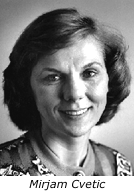
We propose a robust supergravity model of dynamical supersymmetry breaking and gauge mediation, and a natural embedding in non-perturbative string theory with D-branes. A chiral field (and its mirror) charged under "anomalous" U(1)'s acts as a Polonyi field whose hierarchical Polonyi-term can be generated by string instantons. Further quartic superpotential terms arise naturally as a tree-level decoupling effect of massive string states. A robust supersymmetry breaking minimum allows for gauge mediation with soft masses at the TeV scale, which we realise for a globally consistent SU(5) GUT model of Type I string theory, with a D1-instanton inducing the Polonyi term.


"We're really focused on trying to create layers of protection that would improve things for our troops," Peter Antoinette, Nanocomp's president and chief executive officer, told me. "It would take a number of years before you could order up a suit, and then a billionaire would have to pay seven figures for a suit that would work the way they do in the movies."
As an initial step, Nanocomp is working on nanotubes for next-generation wiring in satellites and aircraft. Carbon nanotubes are highly conductive and could replace copper wire in settings where reducing weight is crucial. "We're less than one-tenth the weight of copper, so if you can take 1,000 pounds off these satellites or aircraft, you'd be saving a huge amount of money," Antoinette said.
Commercialization of nanotube wiring could begin as early as next year, Antoinette said. He added that Nanocomp's materials are already undergoing military testing, and body-armor applications could start emerging in 2010 or so.
Kakalios agreed that nanotubes are a technology to watch: "Compared to steel cables, it's about 100 times stronger. Whether you can make this in large enough quantities, in long enough length scales ... that work is still in progress."


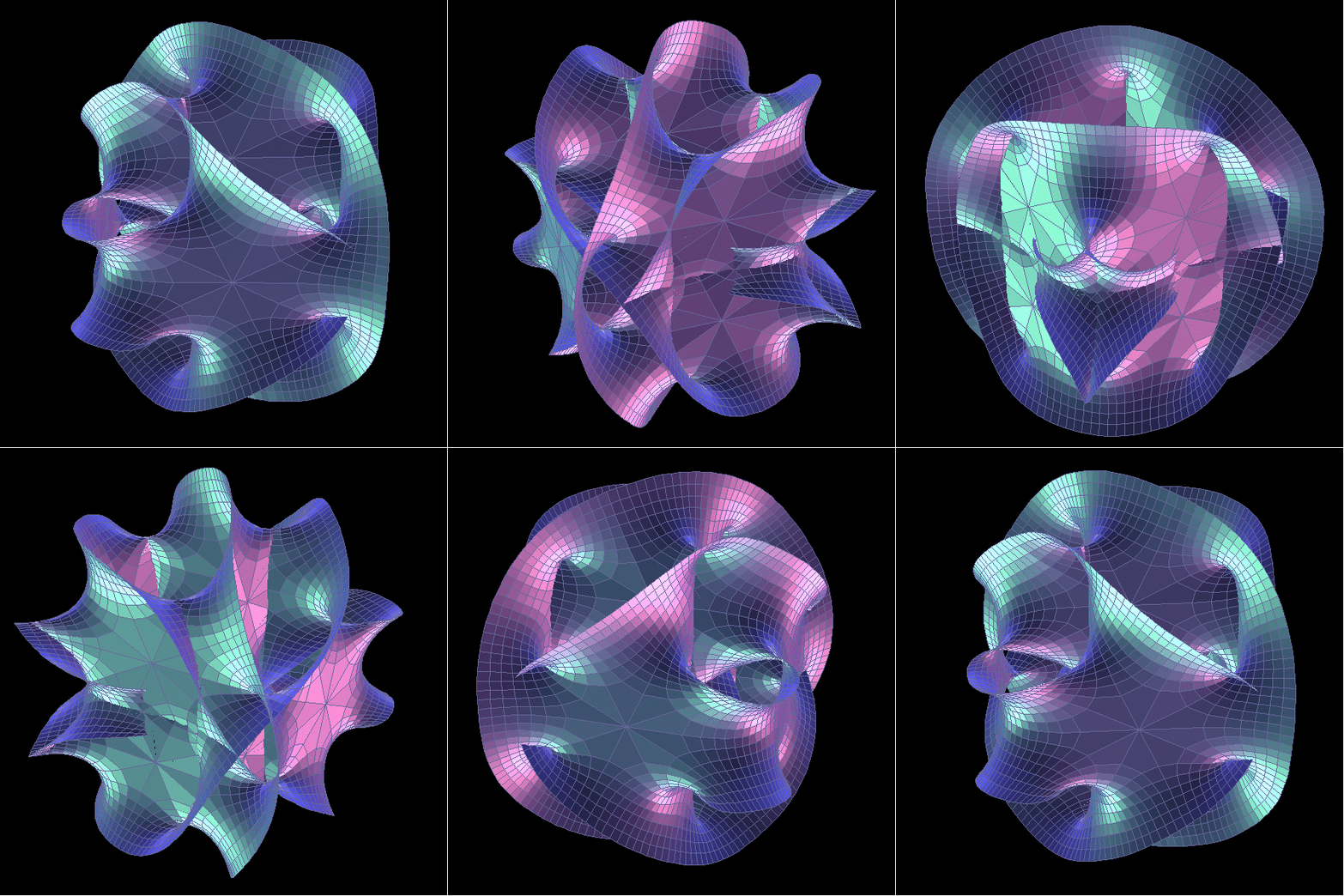




Last friday (06/01/07), I attended the last of the Winter 2007 Caltech High Energy Seminars. The talk was at 1pm, given by KITP post-doc Sean Hartnoll. Hartnoll discussed topological phase changes of N=4 SYM theory (hep-th/0703100). Using both numerical and analytical techniques, Hartnoll found that at weak coupling, the six-sphere eigenvalue distribution transitions to a five-sphere distribution.
An interesting interpretation of this second order phase transition involves the fate of the large AdS black hole spacetime at weak coupling. Given that there are no further phase transitions as a function of coupling, the AdS black hole is described by the five-sphere eigenvalue distribution.
Hartnoll also explained how the five-sphere distribution generalizes the two-dimensional quantum Hall effect. During the question and answer session I mentioned the four and eight-dimensional quantum Hall effects to Hartnoll. He agreed that it would be interesting if his techniques could be applied in such dimensions.


The planned space trip has been so inspiring that Steve Kohler, president of Space Florida, has renamed the zero-gravity research center in Hawking's honor."Many people have asked me why I am taking this flight. I am doing it for many reasons. First of all, I believe that life on earth is at an ever-increasing risk of being wiped out by a disaster such as sudden global warming, nuclear war, a genetically engineered virus or other danger. I think the human race has no future if it doesn’t go into space. I therefore want to encourage public interest in space.
"I have long wanted to go into space, and the zero-gravity flight is the first step toward space travel. I also want to demonstrate to the public that everyone can participate in this type of weightless experience.
"Finally, I am doing this flight to raise money for a number of charities, including ALS, Easter Seals, Starlight Starbright and the X Prize Foundation."


 Posts
All Comments